What actually changes when a hotel rebrands?
Is it just the colors? The furniture? The photos you see online? Or is it something less obvious—like how a space makes you feel the moment you walk in?
That was the question I kept coming back to during Seda Abreeza’s media roundtable last April 16. What I thought would be a straightforward hotel tour turned into something more layered: part design conversation, part reflection on how people travel now, and unexpectedly, a peek into how different creatives think (through their playlists, of all things).
Not a rebrand, but a refinement
At the center of the conversation was Ayalaland Hospitality’s Creative Director Paloma Urquijo Zobel de Ayala, who described the refresh in a way that immediately stood out: if it isn’t broken, don’t fix it.
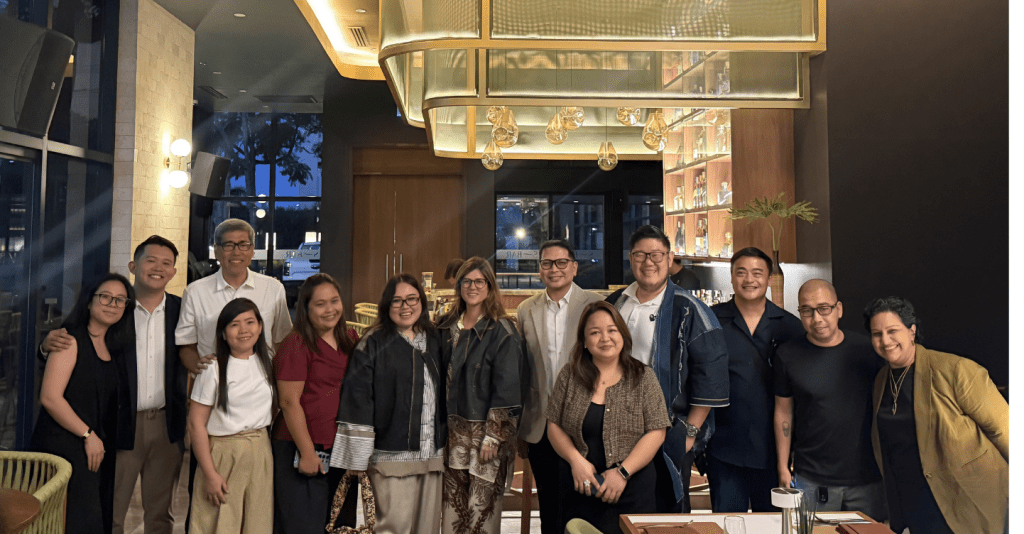
Paloma walked us through the rebrand itself, starting with the premise that shaped everything: Seda needed to evolve without losing what made people trust it in the first place. The fundamentals stayed the same. A good bed. A good bathroom. Good coffee. Good food. Those four things mattered. Everything else was refinement.
Seda has always been that reliable, no-fuss hotel. The kind you book because you know it works. And instead of trying to reinvent that identity, the goal was to refine it.
During the roundtable discussion, one of the ideas that stuck with me was how much travel behavior has evolved. As General Manager Ken Kapulong shared, guests today don’t just go somewhere—they think about where they’re staying, how easy it is, and whether it fits into what they need.
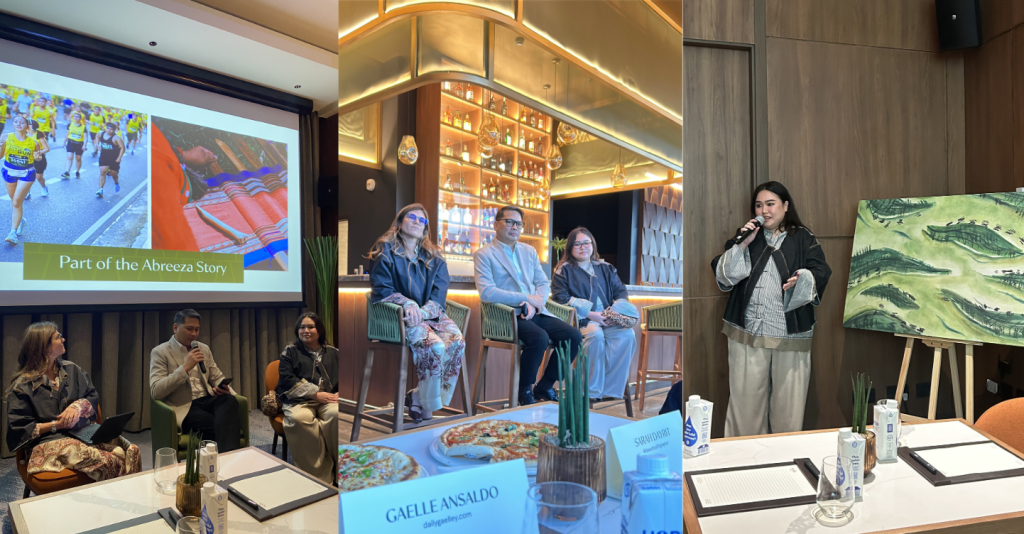
And that shift shows up in small ways. Guests returning and asking for the same breakfast items. The same room setups. The same quiet routines that make a place feel familiar. This refresh is not about grand gestures. It’s about consistency—and how those small details build a relationship over time.
Paloma also talked about mapping the guest journey, figuring out what people actually needed from a hotel stay in 2026, and stripping away the parts that didn’t serve that. The result was a refresh that feels warmer and more grounded without being unrecognizable. The visual identity got modernized. The interiors were updated to feel more intuitive. And every property in the Seda portfolio now weaves in local culture through three deliberate touchpoints: art, food, and community.
At Seda Abreeza, that local layer lives most clearly in Goldie’s work.
So What Does That Look Like in Real Life?
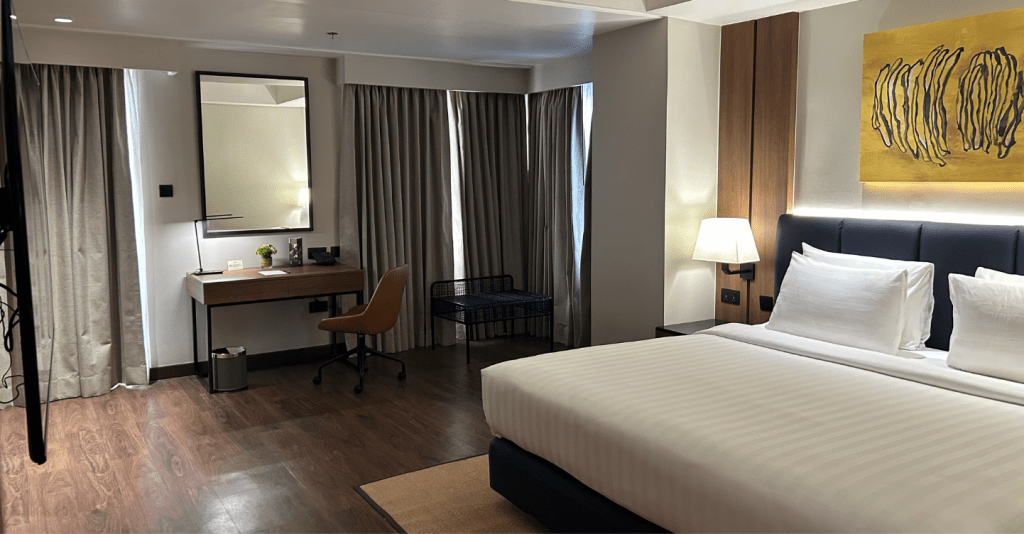
We toured the refreshed spaces right after the conversation, and the changes aren’t exactly loud—but they’re there. The one-bedroom suite is probably the best example.
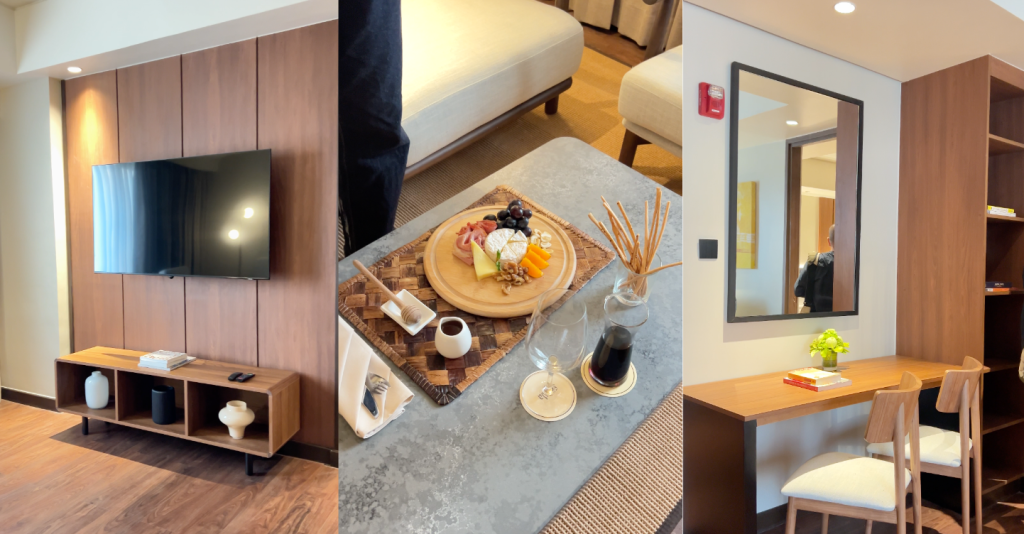
The one-bedroom suite is spacious without feeling wasteful, with clean lines, warm tones, and enough natural light to make the space feel lived-in rather than sterile.
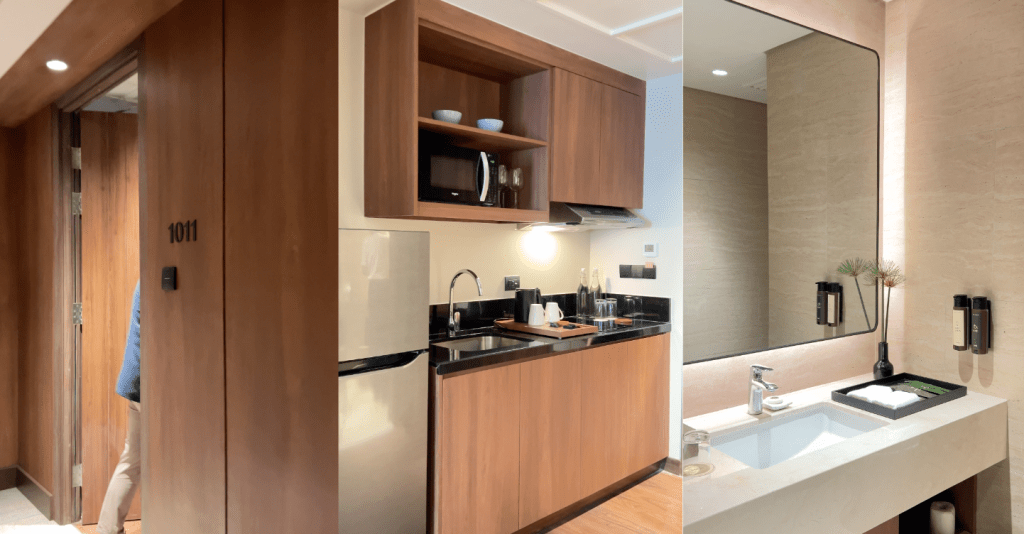
There’s a kitchen, two toilets, a walk-in closet, and a separate working area that doubles as a lounge. The bedroom feels tucked away enough to be restful, while still connected to everything else. The bed looks like the kind you sink into and don’t want to leave. The desk is large enough to actually work at, with outlets positioned where they should be. The bathroom is well-designed and functional.
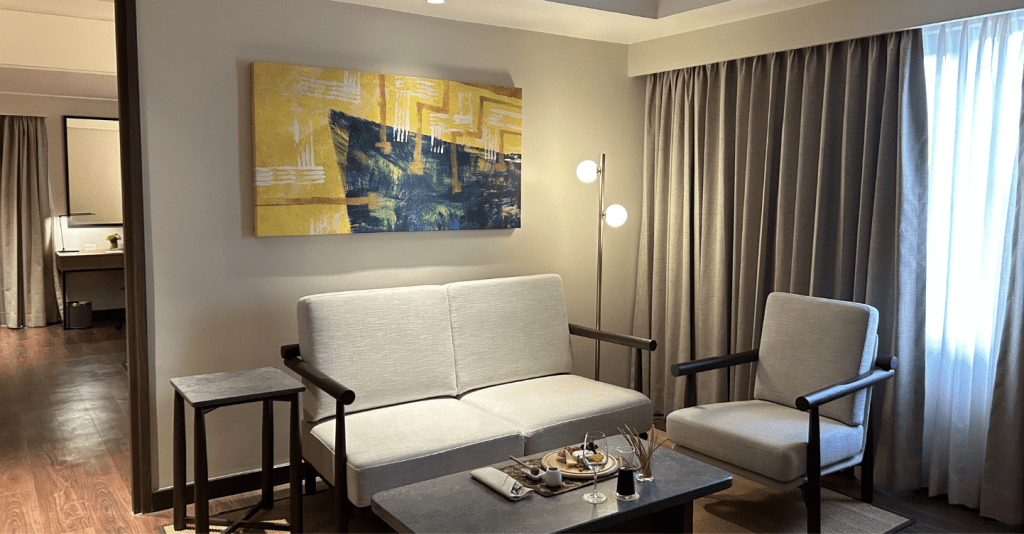
Paloma’s fundamentals, all accounted for.
And I liked how Goldie Siglos’ artwork sits above the bed and extends into the lounge area. It’s not staged—it just… belongs there.
The club lounge is another subtle but meaningful shift.
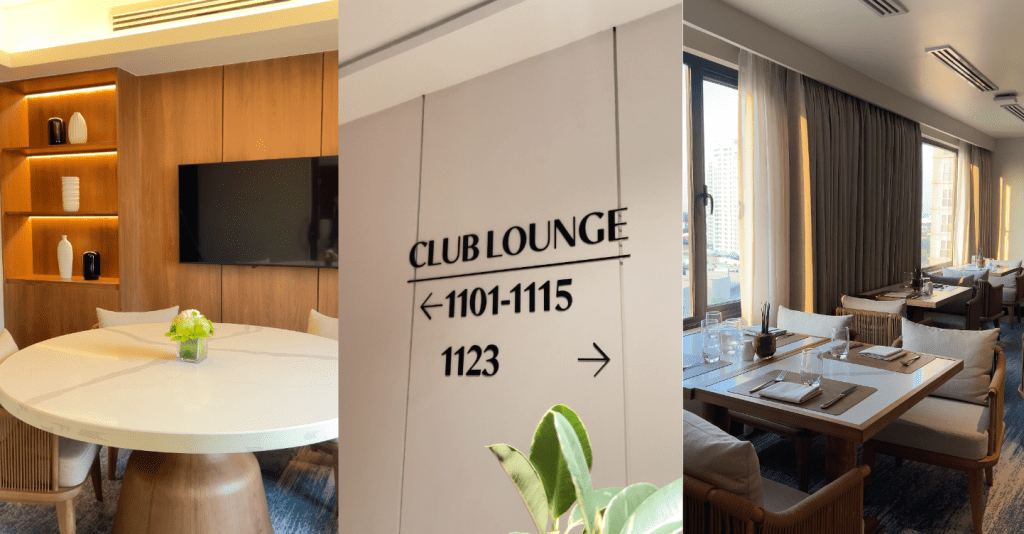
It used to feel more like a functional add-on. Now, it actually feels usable. It’s designed in a way that makes sense for small meetings, and it’s something guests can reserve, not just pass through.
Across the hotel, the interiors feel lighter too. Instead of the deeper, sepia tones Seda used to lean into, the palette now brings in more greens and warmer wood finishes.
It’s not dramatic, but it does change the mood.
Everything feels a bit more grounded.
Where Davao Comes In
One of the more intentional parts of the refresh is how it brings Davao into the space itself. Seda partnered with Goldie “Bulawan” Siglos to create artwork that now lives throughout the hotel.
Her pieces pull from familiar imagery—durian, mangosteen, crocodiles, Kadayawan—but reinterpret them in a way that feels personal rather than simply decorative. Durian and mangosteen, because they’re Davao staples. Crocodiles, because they’re part of the region’s iconography. Kadayawan imagery, because the festival is one of the clearest expressions of what this city values and celebrates.
Goldie has a penchant for hiding words in her work. For about 3-5 minutes, we had a mini-word hunt as we looked at her paintings. When I asked her about her creative process, she mentioned listening to pop and indie folk—something with a beat, but “a little depressing,” in true artist fashion.
It made sense. Her work feels the same way—quiet, reflective, and layered.
As a Davaoeña now residing in Manila, this partnership with Seda Davao felt like a full-circle moment. Goldie recounted her early days as a student designer, frantically working on her thesis and splitting a cost for a Seda hotel room many moons ago. Today, Seda Abreeza is now home to her many pieces.
When Goldie spoke during the presentation, she was observant and deliberate. She explained her take on the rebrand and her process for creating the work, and there was a clarity to the way she talked about rooting the hotel in a sense of place. This wasn’t just decoration, it was documentation and presence.
Of Playlists, Boy Bands, and Film Scores
At some point, I asked a question I didn’t originally plan to include in something like this:
What do you listen to when you’re in a creative headspace?
It felt like a small, almost random question—but it ended up revealing more than expected.
Paloma laughed and said her playlist sounds like it belongs to a sixty-year-old man. Folk-heavy, with artists like Eagles, Dave Matthews Band, Fleetwood Mac, Tedeschi Trucks Band, Little Feat, Dolly Parton, and Led Zeppelin.
GM Ken shared that he starts his mornings with the musical scores of Christopher Nolan films—something cinematic and structured—before casually mentioning he also listens to the Backstreet Boys.
And Goldie’s playlist sits somewhere in between—indie, a little melancholic, but still rhythmic.
It’s a small detail, but it says a lot about how each of them approaches their work.
Why Seda Abreeza, and Why Now
Seda Abreeza being one of the first properties to showcase this refresh feels intentional.
Davao has grown into both a business and lifestyle destination, and the hotel has grown alongside it. The rebrand doesn’t just update the space—it anchors it more in where it actually is.
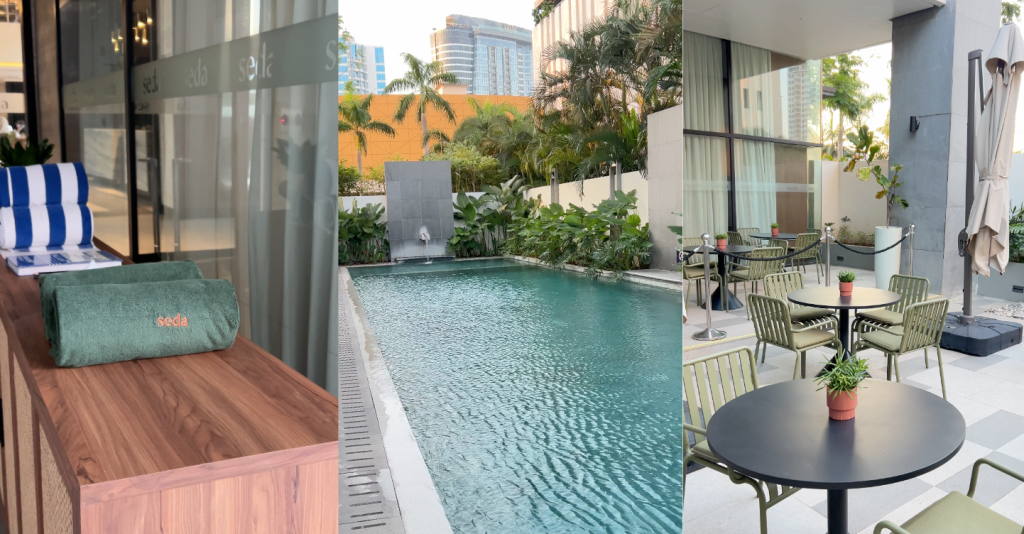
And that shows not just in the design, but in the decision to collaborate with a local artist and bring that perspective into the experience.
So, if you’re looking to stay in Davao, Seda Abreeza is a great choice for leisure and work.
When was your last Seda check-in? Would you stay here again? Let me know in the comments.


Leave a Reply