One of the most exhausting things about being sick isn’t necessarily being sick.
It’s everything that comes before getting help: the commute, looking for parking in one of the busiest districts in Davao, the waiting room, the uncertainty of whether you’ll be seen on time… And the realization that what should have been a quick consultation somehow takes up your entire day.
If you’ve ever spent hours waiting outside a clinic only to spend fifteen minutes with a doctor, you probably know exactly what I mean. That’s partly why I’ve been using telemedicine for years.
Telemedicine became popular during the pandemic when social distancing rules were imposed. Back then, I was also working for a telemedicine behavioral health clinic as an intake coordinator. Since last year, I’ve been attending online counseling sessions. That said, telemedicine isn’t exactly new to me.
Telemedicine, in my opinion, removes one of the biggest barriers to healthcare: accessibility.
So when I got invited to learn more about mWell during their recent visit to Davao, I was curious. Not because I needed convincing that telemedicine works. But because I wanted to see how far healthcare technology in the Philippines has come since I first started using it.
What Is mWell?
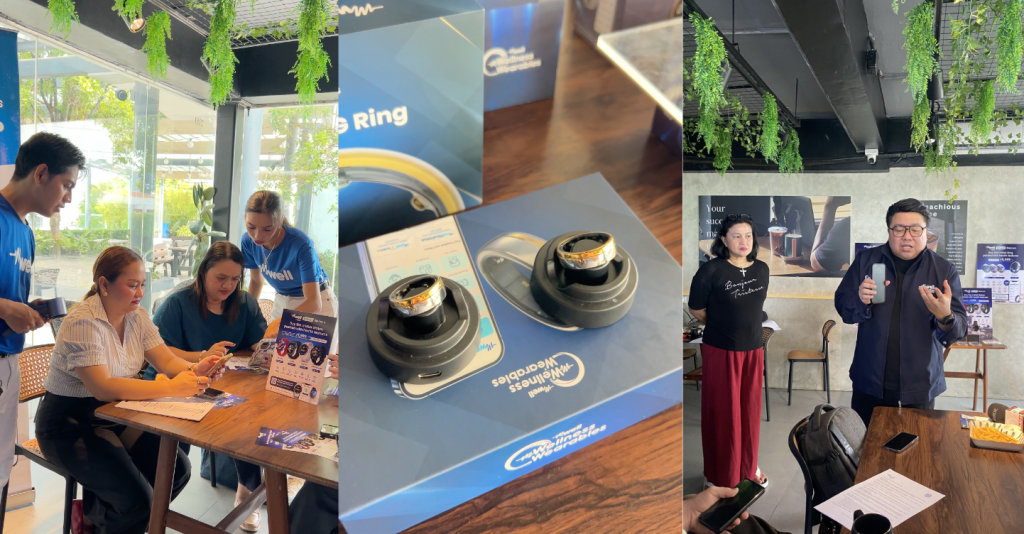
mWell is the Philippines’ first fully integrated digital health and wellness platform. Think of it as a healthcare ecosystem rather than just a telemedicine app.
Through the platform, users can:
- Book teleconsultations with doctors
- Access mental health support
- Monitor health metrics
- Track fitness goals
- Access nutrition and wellness content
- Connect wearable health devices
What impressed me most was the scale. The platform currently provides access to more than 3,700 doctors across 42 medical specializations. And because consultations happen online, users can access healthcare wherever they are.
Whether you’re in Davao, Manila, or even abroad.
Why Every Filipino Should Try Telemedicine
I think one reason telemedicine resonates with me is because healthcare isn’t always convenient. And it really shouldn’t have to be this difficult.
Sometimes you need medical advice quickly. Sometimes you’re too busy to spend an entire afternoon at a clinic. Sometimes you’re not physically able to leave the house.
Telemedicine doesn’t replace in-person healthcare. But… it does remove a lot of friction.
It’s healthcare that adapts to modern life instead of forcing people to rearrange their lives around healthcare. I think that’s why so many Filipinos have embraced it over the past few years.
Trying the mWellness Wearables
Aside from learning more about the app itself, I also got to try the mWellness Wearables lineup. And admittedly, this was the part I was most excited about.
Since I started changing my lifestyle, I’ve been more keen when it comes to tracking my health data. These include steps, my sleep score, and my activity levels. I think this is easily one of the coolest innovations in healthcare– being able to track your health data to better understand what your body needs.
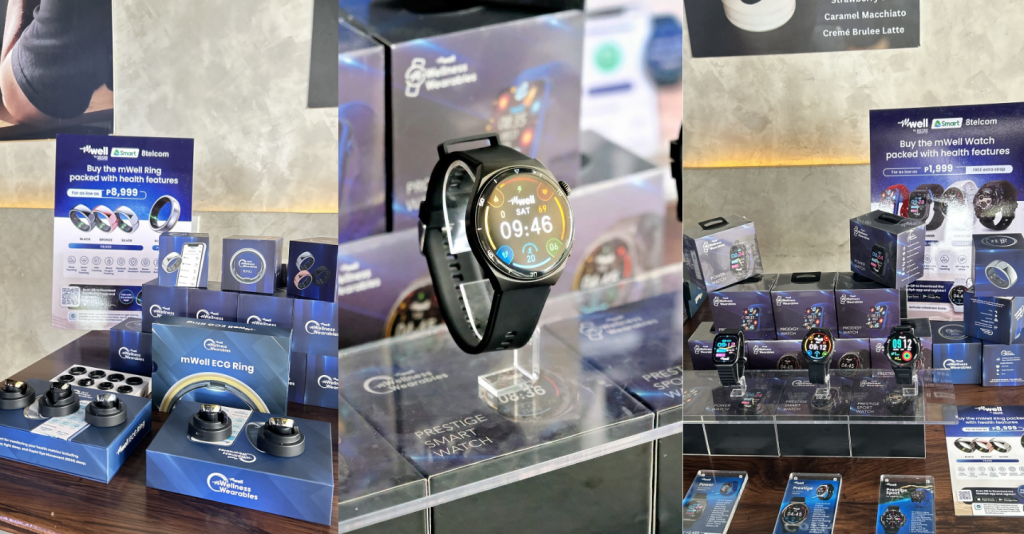
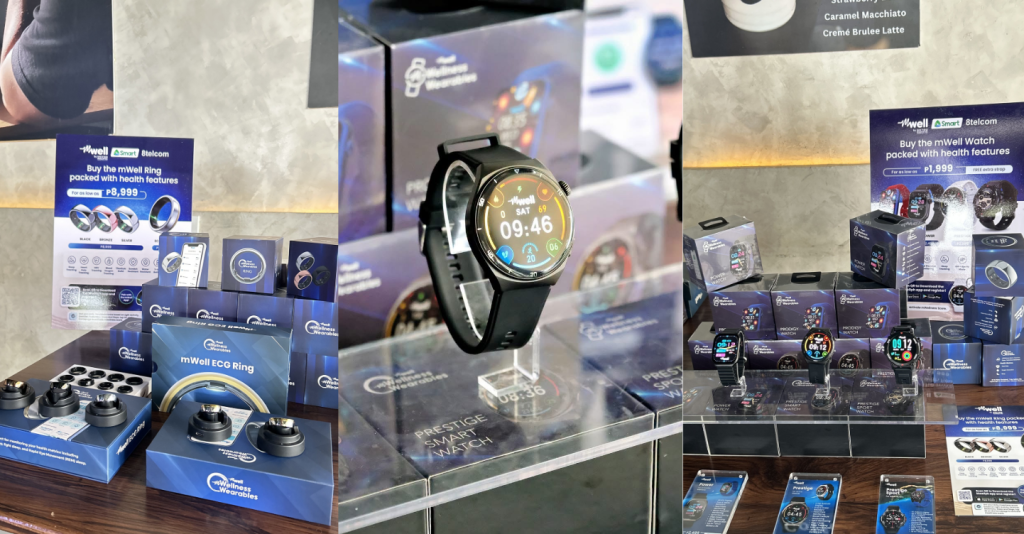
The wearable lineup includes smart watches, smart rings, and even an ECG-enabled wellness ring.
The mWell Ring
One of the devices that immediately caught my attention was the mWell Ring. Unlike a traditional smartwatch, it looks subtle enough to wear every day.
The titanium ring tracks:
- Heart rate
- Blood oxygen levels
- Sleep stages
- Heart Rate Variability (HRV)
And because it’s worn on your finger, it feels much less intrusive than constantly wearing a watch.
The mWell ECG Ring
The standout device for me was the mWell ECG Ring. Priced at PHP 13,999, it’s currently the first ECG-enabled wellness ring in Southeast Asia.
The ring provides deeper heart health insights while continuing to track sleep and wellness metrics. As someone who spends most of her day staring at screens and occasionally convincing herself she’s “resting” while still answering emails, I found the sleep tracking particularly interesting.
The Smart Watches
The mWell Watch lineup starts at PHP 1,999 and goes up to PHP 3,499 depending on the model.
Features include:
- Heart rate monitoring
- Blood oxygen tracking
- Blood pressure monitoring
- Sleep tracking
- Activity tracking
- 100+ sports modes
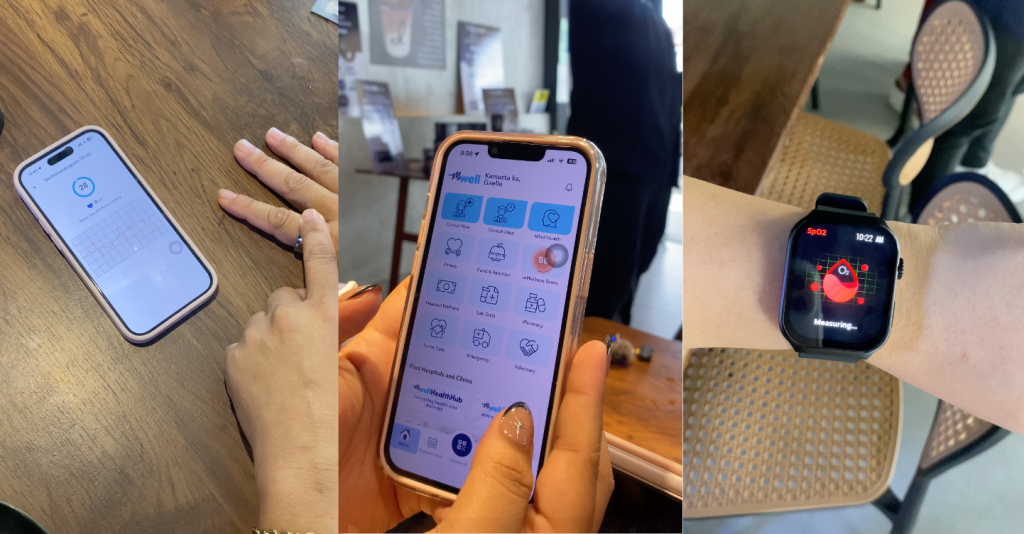
I also got to try the blood pressure monitoring feature firsthand. And while I don’t think wearable technology replaces professional medical equipment, it’s a useful way to stay more aware of your overall health patterns.
Health Data That Actually Means Something
What makes the ecosystem interesting is that the wearables connect directly to the mWell app. Instead of collecting data that sits unused, the information contributes to something called the mWellness Score.
The score looks at:
- Exercise
- Activity levels
- Sleep
- Steps
- Sedentary behavior
Essentially creating a snapshot of your overall wellness habits. I think that’s where technology becomes useful. Not when it overwhelms you with numbers. But when it helps you better understand yourself.
A Health App Built in the Philippines
Another thing worth mentioning is that mWell isn’t just succeeding locally.
The platform recently received international recognition at Mobile World Congress 2026 in Barcelona, winning the GLOMO Award for Best Mobile Innovation Supporting Emergency or Humanitarian Situations.
That’s a pretty significant achievement. Especially considering it places a Filipino health-tech platform alongside some of the biggest technology companies in the world. It’s nice seeing Philippine innovation getting recognition on a global stage.
Healthcare That Meets People Where They Are
After spending the morning learning about mWell, I kept coming back to the same thought. Healthcare shouldn’t feel difficult to access.
The easier it becomes for people to consult doctors, monitor their health, and seek support when they need it, the more likely they are to actually do it.
And sometimes that’s already half the battle.
If you’re someone who’s been curious about telemedicine, wellness tracking, or simply finding more convenient ways to stay on top of your health, mWell is worth exploring.
Because taking care of yourself is already hard enough. There are tools today that make it easier.
Have you ever tried telemedicine or used a wellness wearable? I’d love to know what’s worked for you.


Leave a Reply