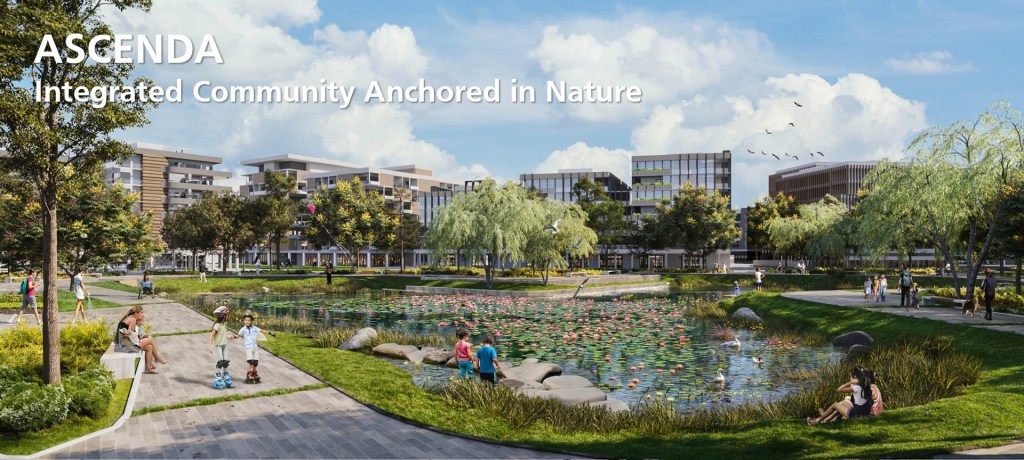
I didn’t make a conscious decision to start spending more time in the south. It just kept happening.
One weekend it was a flea market. The next, someone recommended a cafe. Then another invite, this time somewhere in Juna. Before I knew it, I was driving past areas I used to consider out of the way, but it no longer felt like a stretch. Before, it was the kind of plan you had to think about. Traffic, distance, the mental effort of leaving your usual spots. It felt far.
Now, it just feels like… another option. And lately, a pretty good one.
Weekend Markets That Feel Less Like Events and More Like Hangouts
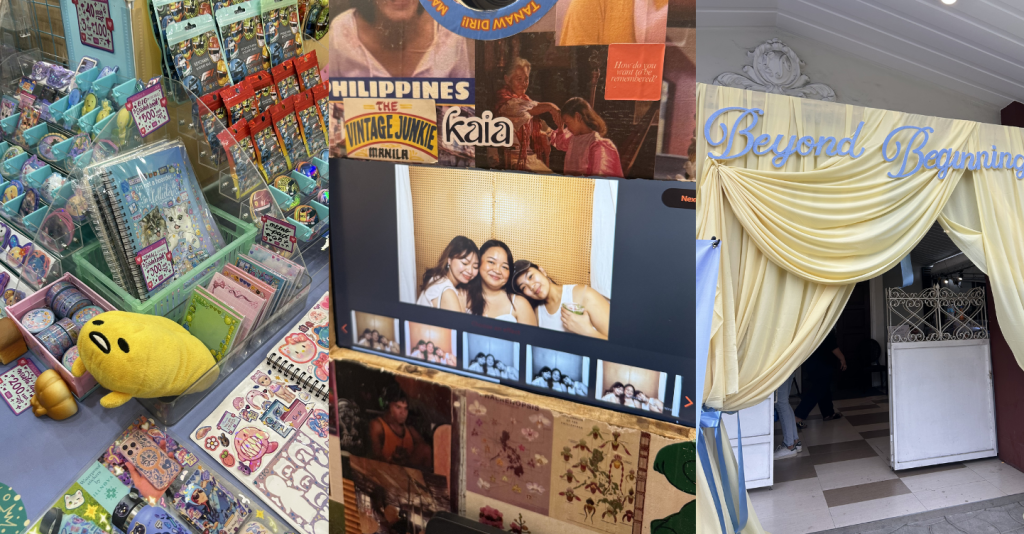
I think a big part of the shift comes from the rise of weekend markets.
They’re still called flea markets, but that label’s starting to feel outdated. What’s happening now is closer to a mix of food fairs, community events, and small business showcases all in one place.
You arrive with a loose plan. Maybe to try one stall or support a brand you saw online. Then you start walking around. You taste something new. You recognize a familiar face. Then, before you know it, you’re staying longer than you intended.
Spaces like Three Yards and Tio Noning’s have made this format feel natural, especially in areas like Juna and Tulip Drive. These used to be places by pass by or have a meal at, not traditional event venues. They sit closer to residential spaces, which changes the atmosphere entirely.
A Food Scene That Does Not Need to Be Loud
The food in the south does not rely on hype. It builds quietly, through word of mouth, repeat visits, and the kind of recommendations that come with very little explanation.
Take Inda House in Dumoy. It is not the most accessible location, but people go anyway. That alone says enough. It started as a matcha spot and has grown into a space that can host pop-ups and small gatherings. It gives people a reason to stay, not just order and leave.
Cafe Basilico is another example. Known for pasta and pizza, but more importantly, known for their consistency. It is the kind of place people bring up casually, without needing to justify why.
Then there are smaller, more personal spaces.
Stella’s Cuisine focuses on kakanin that feels familiar in the right way. It isn’t trying to modernize anything. It simply does it well. Knto Cinco, for example, started as a home café in Puan, but it still carries that same energy even as it grows. Kaniii Slow Bar leans into coffee that feels deliberate. Strong, well-made, and not rushed.
Space Changes How You Spend Your Time
There’s also a physical difference you start to notice. The south gives you more room. Not in a dramatic sense, but enough to affect how you move through your day. You aren’t constantly adjusting to crowds or squeezing plans into tight schedules. You’ve more flexibility. You can stay longer without feeling like you’re in the way.
And if you continue further, that space opens up even more.
Eden Nature Park remains a constant. It has always been the default answer for a quick reset, and it still holds that role. When Eden opened their doors to the public, it was one of the first nature parks in Davao. The park has since grown into a place that offers hiking trails, a fishing pond, flower and herb gardens, and many other activities. Whether you’re looking for a quiet time alone or a fun time with family and friends, Eden Nature Park remains a good choice.
But, if you’re looking for something smaller and more budget-friendly, places like Saddleback Haven, Loleng’s Mountain Resort, and Sunridge Resort offer a different scale.
Access to the South
The shift isn’t only cultural, lately it’s also been practical. The south is easier to reach now than it used to be. The developing Coastal Road and the ongoing improvements in public transport have reduced the mental distance people associate with it. What once felt like a separate part of the city now feels connected.
And once that barrier disappears, everything else will follow.
From Destination to Everyday Option
The most telling change is how people talk about the south now. It’s no longer just a place you go to on weekends or when you want a break. It’s becoming part of the conversation around where to spend time, and even where to live.
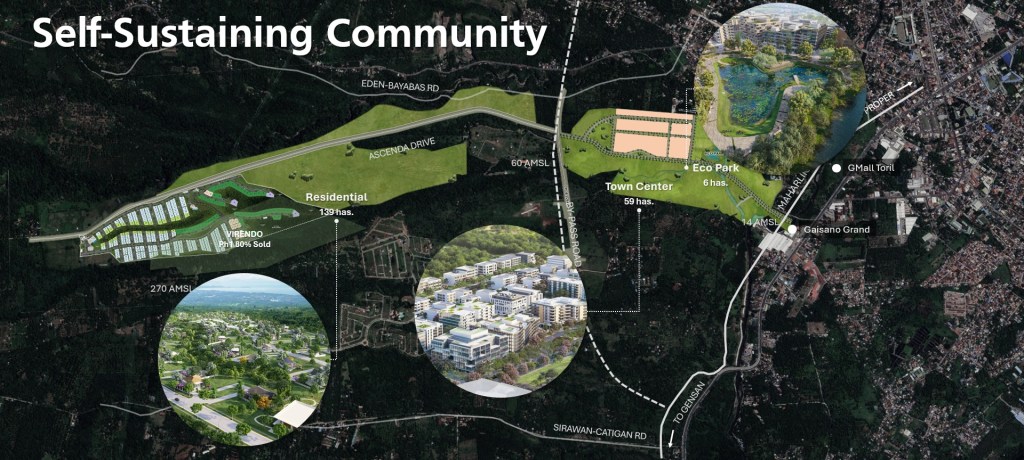
Developments like Ayala Land Premier’s Virendo in Toril reflect that shift. The idea of being closer to nature while remaining connected to the city is no longer a niche preference. It’s something more people are considering.
Virendo comes from two Spanish words “Verde,” which means green and “Pausado,” which means gentle or deliberate. Touted as an elevated green haven, the neighborhood has a rolling terrain with waterways woven through it and majestic views of the Mt. Apo Talomo mountain range and the Davao Gulf.
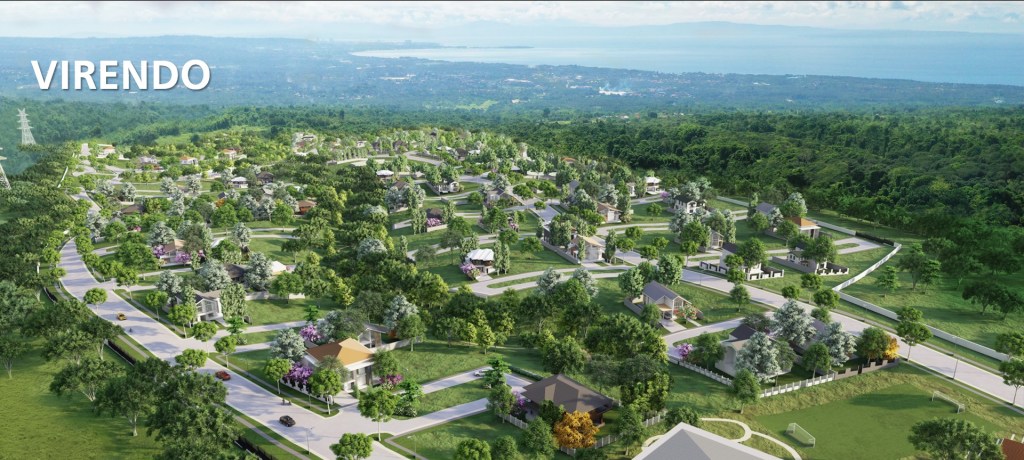
Phase 1 of the development will include 37.40 hectares with 150 lots. Lot sizes range from 450 to 1,803 sqm. Virendo will have two (2) amenity centers for residents.
The Residents’ Lounge located near the main entrance of the neighborhood will include indoor and outdoor lounges and a lawn space for recreation.
While the Sports & Leisure Center situated at the highest point of the neighborhood will have a social hall, pool complex, great lawn and multi-purpose court.
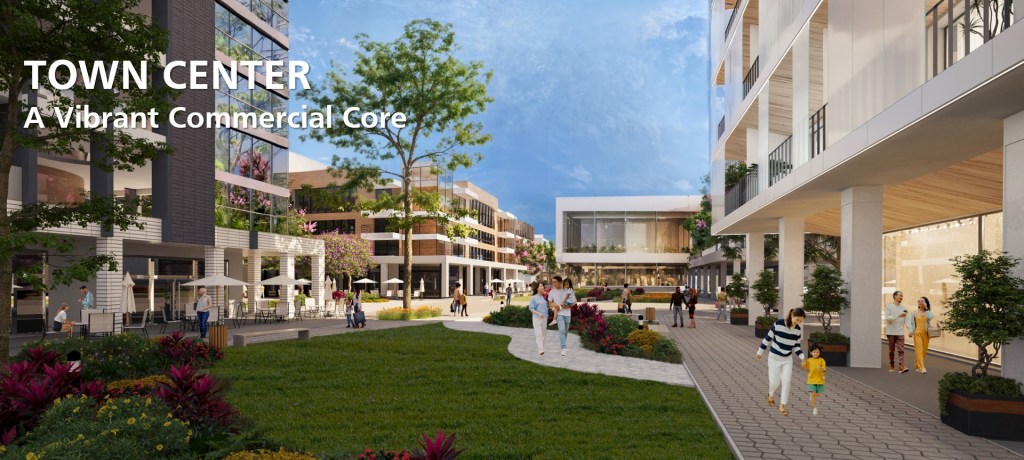
The neighborhood is located near Eden Nature Park, Saddleback Haven, St. Peter’s College, and Davao Central College.
It Works Without Trying Too Hard
What stands out most is that the south is not trying to position itself as anything. It’s not competing with downtown. It is not trying to replicate the density of malls or commercial centers.
It’s simply developing at its own pace. You go because there is something to do, somewhere to eat, or simply because it makes sense to be there.
And more often than not, you end up staying longer than planned.
What are your favorite South spots? Let me know in the comments!

 dailygaelley.com
Leave a comment